Two houses twenty miles apart can face very different weather. One sits a few blocks from the ocean in damp, salty air and morning fog. The other is in an inland valley where summer afternoons hit triple digits and dry brush covers the hills behind the backyard. Both homeowners might ask for the same tile or shingle, but a roof that suits one house can wear out early on the other.
Those differences are why the planning for roof installation in San Diego works best when it starts with the location rather than a product catalog. Distance from the coast, sun exposure, elevation and wildfire zoning affect almost every layer of a roof, including the fasteners and the flashing as well as the surface you see from the street.
The energy rules can change with the zip code, too. Building energy codes in some inland climate zones require a reroof to meet minimum standards for reflectance and heat emission, while many coastal areas are exempt. The Cool Roof Rating Council’s guide for home and building owners explains how those ratings work and how to read them on a product label.
Near the Ocean, Metal Is the Weak Point
Close to the coast, the main threat is corrosion rather than sun. The marine layer carries salt inland, sometimes for several miles. That salt settles on every exposed surface and stays there, because fog keeps everything damp for hours each morning.
Roofing materials themselves usually hold up well. Concrete tile, clay tile and good asphalt shingles don’t rust. The problems show up in the metal parts that hold everything together. Standard galvanized nails, steel drip edges and cheap flashing can corrode much faster near the water than they would inland. A roof with sound tiles can still leak because a flashing behind a chimney has rusted through.
On a coastal installation, it’s worth asking about:
- Stainless steel or heavily coated fasteners rather than standard nails
- Aluminum, copper or coated flashing instead of bare galvanized steel
- Sealed or corrosion-resistant metal at the drip edge and valleys
- Gutters and downspouts rated for salt exposure
- Extra attention to north-facing slopes, where fog lingers and algae grows
Algae and moss deserve a mention as well. Shaded slopes near the coast stay damp long enough for dark streaks to form. Many shingle lines now include algae-resistant granules, which cost little extra and keep the roof looking cleaner for years.
Inland Valleys Bring Heat Instead
A few miles from the coast, the climate flips. Fog burns off early, and the roof spends long afternoons in direct sun. Surface temperatures on a dark roof can climb far above the air temperature. That heat moves into the attic, makes the air conditioner work harder, and slowly bakes the roofing materials.
Here the priorities shift toward reflectance and ventilation. Lighter colors and cool-rated shingles or tiles reflect more sunlight and keep the attic cooler. Balanced ventilation, with intake at the soffits and exhaust near the ridge, lets heat escape instead of building up under the deck. Without good airflow, even a reflective roof surface can’t fully protect shingles from aging early.
Underlayment matters more inland, too. Under tile, it’s the real waterproofing layer, and heat is what wears it out. Many installers now use synthetic or high-temperature underlayments in hot zones, sometimes in two layers, because replacing underlayment later means lifting every tile.
The Hills Add Fire to the Equation
Homes near canyons, open hillsides and brush-covered slopes face a different threat. In areas mapped as high wildfire hazard zones, building codes generally require a Class A fire-rated roof assembly. Tile, many asphalt shingles and metal can all reach that rating when they’re installed with the right underlayment.
The roof covering is only part of the protection. During a wildfire, many homes catch fire from wind-blown embers rather than direct flames. Embers collect in gutters full of dry leaves, slip into gaps at the ends of barrel tiles, and get pulled through attic vents. A fire-aware installation closes those openings. That means bird stops or eave closures at tile edges, ember-resistant vents, and noncombustible gutter guards or metal gutters.
The federal wildfire preparedness page at Ready.gov explains how to make the area around a home less vulnerable, including keeping roofs and gutters free of debris. A new roof is the best time to deal with those details, because the eaves and vents are already open and easy to reach.
Weight, Structure and Material Choice
Material choice is also about structure. Concrete tile weighs several times as much as asphalt shingles. A house originally framed for shingles may need an engineering check, and sometimes added support, before it can carry tile. Going the other way, from tile to a lighter material, takes load off older framing and can be a smart move for homes with sagging rooflines.
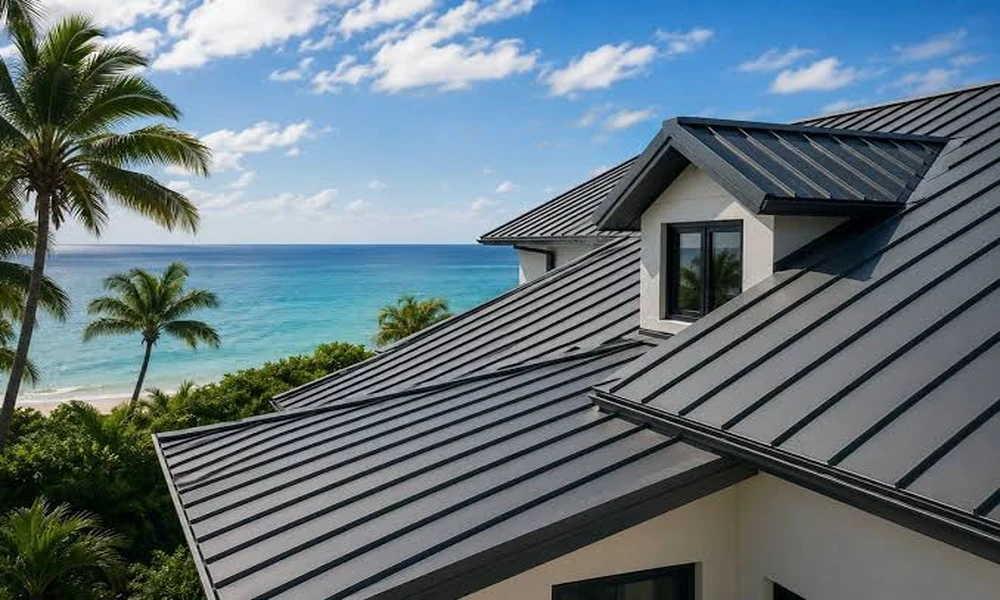
Metal roofing has gained ground across all three settings. It’s light, it can reach a Class A fire rating, and standing seam panels with concealed fasteners hold up well near the coast when the right alloy and coating are used. Its downsides are higher upfront cost and a look that doesn’t suit every architectural style.
What the Installation Itself Looks Like
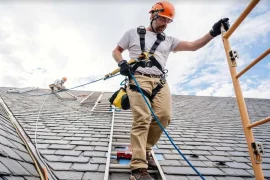
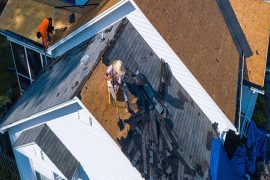
Most residential roof replacements follow the same order regardless of material. The crew tears off old roofing down to the deck, and then the deck is inspected. Soft, delaminated or rotted boards get replaced before anything new goes down. Underlayment comes next, then flashing at the walls, valleys, chimneys and penetrations, and finally the roofing itself. Permits and inspections fit in along the way, usually at least one final inspection and sometimes an earlier one at the deck or underlayment stage.
A careful crew protects landscaping, uses magnets to sweep up stray nails, and keeps the house watertight overnight if the job spans several days. In a dry climate, weather rarely causes delays, but early winter storms can still interrupt a tear-off. That’s one reason late summer and early fall stay popular for this kind of work.
The best roof for a house is the one designed for the conditions at that address. Choosing fasteners, ventilation and fire details for your location makes the most difference over the life of the roof.