Owning a home means dealing with small repairs from time to time. A cabinet handle might come loose, a picture frame needs hanging, or a door starts making an annoying squeaking sound. These problems are usually simple, but they can become frustrating when you don’t have the right tools nearby.
The good news is that you don’t need a garage full of expensive equipment to take care of your home. A few basic hand tools can help you manage common repairs, put furniture together, and handle small home improvement projects.
If you’re a new homeowner, building a tool kit is actually a good place to start. You can buy the essentials first and add more tools as you need them.
So, what basic tools should every homeowner have? Here are the most useful ones and why they deserve a place in your toolbox.
Why Every Homeowner Needs a Basic Tool Kit
Small problems around the house often happen when you least expect them. Maybe a drawer won’t close properly, or a screw falls out of a cabinet hinge.
Without basic tools, even a simple repair can become a bigger hassle.
Having a home tool kit makes everyday maintenance easier. It helps you:
- Handle minor repairs quickly. You can tighten screws, adjust hardware, and fix loose fixtures without waiting for someone else.
- Save money on simple jobs. Some repairs are easy enough to complete yourself instead of hiring help.
- Keep your home in good condition. Regular small fixes can prevent minor problems from getting worse.
- Feel more confident. Learning how to use basic tools makes home maintenance less intimidating.
Of course, not every repair should be a DIY project. Electrical work, major plumbing problems, and structural repairs are usually better left to qualified professionals.
But for everyday household tasks, a few reliable tools can make a real difference.
10 Basic Tools Every Homeowner Should Have
You don’t need to buy everything at once. Start with tools that can handle several different jobs around your house.
1. Claw Hammer
A hammer is probably one of the first tools people think about when building a home tool kit. And there’s a good reason for that.
A standard claw hammer can drive nails into wood and remove nails when needed. It’s useful for hanging certain wall decorations, assembling simple wooden projects, and making minor repairs.
For most homeowners, a 16-ounce claw hammer is a practical choice. It’s comfortable enough for everyday jobs without being too heavy.
Helpful tip: Choose a hammer with a comfortable, non-slip grip. It makes small projects easier, especially if you’re not used to working with tools.
2. Screwdriver Set
You’ll probably use screwdrivers more often than you expect.
They’re useful for tightening loose cabinet handles, adjusting door hinges, assembling furniture, and fixing small household items.
A good screwdriver set should include:
- Phillips-head screwdrivers for cross-shaped screws
- Flathead screwdrivers for straight-slot screws
- Different sizes for larger and smaller fasteners
You might also want a screwdriver with interchangeable bits. It takes up less storage space and can work with several types of screws.
One thing worth remembering is that using the wrong screwdriver size can damage a screw head. Matching the tool to the screw makes the job easier.
3. Tape Measure
Before buying furniture, installing shelves, or hanging decorations, you need accurate measurements.
That’s where a tape measure becomes useful.
A 16-foot or 25-foot tape measure is enough for most household projects. You can use it to check wall space, measure doorways, and figure out whether furniture will fit in a particular room.
It also helps when you’re planning small home improvements.
Imagine buying a new cabinet only to discover it’s slightly too wide for the space. A quick measurement could have prevented that problem.
Helpful tip: Measure twice before drilling, cutting, or buying materials. It’s a simple habit that can save time and money.
4. Adjustable Wrench
An adjustable wrench is designed to grip nuts and bolts of different sizes.
Instead of keeping several individual wrenches, you can use one adjustable tool for many small repairs.
It’s helpful for assembling furniture, tightening certain household fixtures, and working with accessible plumbing fittings.
An 8-inch adjustable wrench is a useful starting size for homeowners.
Just be careful when working with plumbing connections. Overtightening can damage fittings or cause leaks. If a connection is already leaking, the solution may involve replacing a worn part rather than simply tightening it.
5. Pliers
Sometimes you need to grip something firmly, bend a small piece of metal, or remove an object that’s difficult to reach.
Pliers help with those jobs.
Two types are particularly useful:
- Slip-joint pliers: Good for gripping small objects and handling general household tasks.
- Needle-nose pliers: Helpful when working in narrow spaces or holding small parts.
You don’t necessarily need a large plier set. One or two good pairs are usually enough when you’re just starting.
Avoid using ordinary pliers on live electrical components. Electrical repairs require proper safety procedures and, in many cases, a qualified electrician.
6. Utility Knife
A utility knife is one of those tools that seems ordinary until you realize how often you use it.
It can help you open packages, cut cardboard, trim certain materials, and remove old caulk when preparing surfaces.
Look for a utility knife with a retractable or folding blade and a secure locking mechanism.
Keep spare blades available, too. A dull blade can slip more easily because it requires extra force to cut.
Always cut away from your body and store the knife safely when you’re finished.
7. Cordless Drill and Driver Bits
A cordless drill isn’t absolutely necessary for every homeowner, but it’s one of the most convenient tools to own.
You can use it to drill holes, drive screws, assemble furniture, and install certain shelves or household accessories.
For general home use, a compact 12-volt or 18-volt drill-driver is usually enough.
Choose one with adjustable speed and torque settings. These features help you control the tool when working with different materials.
You’ll also need basic drill bits and screwdriver bits.
Before drilling into a wall, check for possible electrical wiring, plumbing, or other hidden services. Use suitable wall anchors for the surface and the weight of whatever you’re installing.
8. Spirit Level
Have you ever hung a picture, stepped back, and realized it looks slightly crooked?
A level helps prevent that.
This simple tool tells you whether a surface is horizontally level or vertically straight.
It’s useful for installing shelves, hanging pictures, positioning mirrors, and checking small DIY projects.
A 9-inch torpedo level is compact and works well for many household tasks. A longer level can be useful for bigger projects.
Some homeowners prefer digital levels, but a traditional bubble level is usually all you need.
9. Flashlight or Rechargeable Work Light
Good lighting matters more than people realize when doing repairs.
A flashlight helps you see behind appliances, inside cabinets, under sinks, and around dark storage areas.
It’s also useful during power outages.
A rechargeable work light can be even more convenient because it allows you to keep both hands free while working.
If you’re building a tool kit, consider keeping a small flashlight with fresh batteries or a charged work light nearby.
10. Hex Key or Allen Wrench Set
Many furniture pieces use hexagonal screws, especially ready-to-assemble desks, chairs, shelves, and cabinets.
A hex key set makes these projects much easier.
You may already have a few small Allen keys left over from furniture purchases, but they can be easy to lose.
Keeping a complete set in your toolbox means you won’t have to search for the right size whenever a chair or table needs tightening.
Look for a set with both common metric and imperial sizes if you work with furniture or hardware from different manufacturers.
Additional Tools That Make Home Repairs Easier
Once you’ve collected the essentials, there are a few other tools worth considering.
Stud Finder: Helps locate framing members behind certain walls before installing shelves, mirrors, or other heavy items. It should not be relied on alone to identify hidden wires or pipes.
Putty Knife: Useful for applying wall filler, scraping loose paint, and preparing small surfaces for repairs.
Socket Wrench Set: Makes tightening and loosening bolts easier, especially when working on furniture, equipment, or certain outdoor projects.
Caulking Gun: Helpful for applying sealant around suitable gaps, joints, and fixtures. Be sure to choose the correct sealant for the material and location.
Non-Contact Voltage Tester: Can help identify the possible presence of AC voltage, but it cannot prove that a circuit is safe to touch. Electrical work requires appropriate testing and safety procedures.
You don’t have to purchase every tool immediately. It’s better to add them based on the type of maintenance your home actually needs.
How to Choose the Right Tools for Your Home
Walking into a hardware store can feel overwhelming. There are dozens of brands, different sizes, and plenty of tools that look almost identical.
But choosing basic tools doesn’t need to be complicated.
Focus on Quality Instead of Quantity
A large, inexpensive tool set might look like a good deal, but you may never use half the pieces.
Instead, choose a smaller collection of dependable tools that feel comfortable and are suitable for their intended jobs.
You don’t need professional-grade equipment for occasional household repairs. Just avoid poorly made tools that bend, slip, or break easily.
Think About the Repairs You Actually Do
Not every home needs the same tools.
Someone living in a small apartment might mostly need screwdrivers, a hammer, a tape measure, and a utility knife.
A homeowner with a yard, garage, or larger property may eventually need gardening tools, a ladder, or additional maintenance equipment.
Start with common household tasks, then expand your collection as needed.
Choose Tools That Are Comfortable to Use
Tool size, weight, and grip matter.
A heavy hammer or bulky drill can be difficult to control, especially for beginners.
Whenever possible, choose tools that feel balanced in your hand and don’t require unnecessary force.
How Much Should a Basic Home Tool Kit Cost?
You don’t need to spend hundreds of dollars right away.
For a beginner, a basic set of hand tools can often be assembled for roughly $50 to $150, depending on the brand, quality, and what’s included. Adding a cordless drill and extra accessories can increase the total.
Rather than purchasing everything in one shopping trip, consider buying tools gradually.
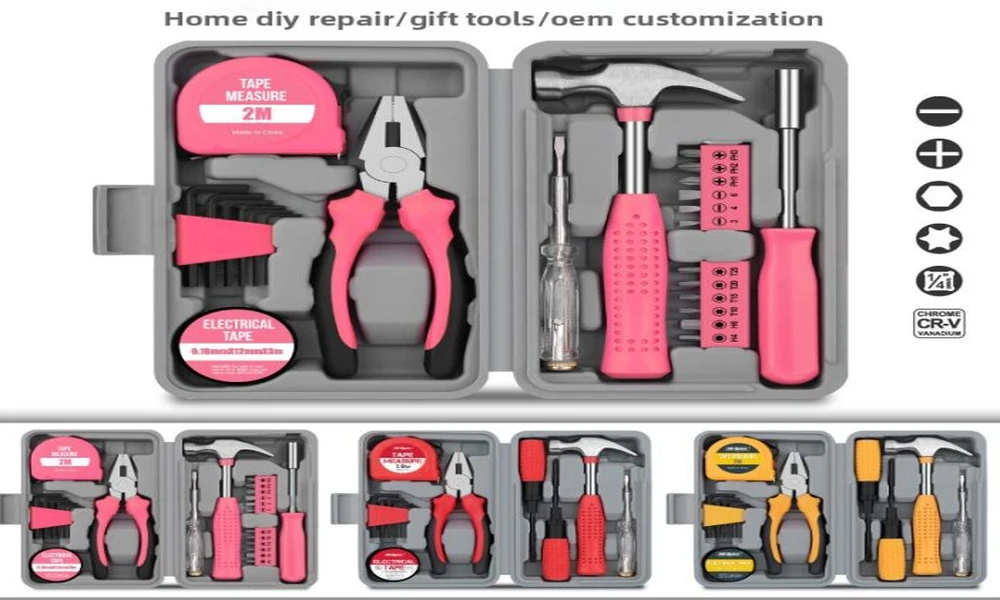
Start with a hammer, screwdrivers, tape measure, adjustable wrench, pliers, and utility knife. Then add a drill, level, and specialty tools when a project calls for them.
This approach helps you avoid spending money on tools that might sit unused for years.
How to Store and Maintain Your Tools
Buying the right tools is only part of the process. You also need to keep them organized and in good condition.
A simple toolbox, tool bag, or storage cabinet is usually enough for a basic collection.
Try these easy habits:
- Keep everything in one place. Store frequently used tools together so they’re easy to find.
- Clean tools after use. Wipe away dust, dirt, and moisture to help prevent rust.
- Store tools somewhere dry. Avoid leaving metal tools exposed to rain or damp conditions.
- Check for damage. Replace cracked handles, damaged cords, or worn-out accessories.
- Keep sharp tools secure. Store utility knives and other cutting tools away from children.
- Maintain drill batteries properly. Follow the manufacturer’s charging and storage instructions.
You don’t need an elaborate storage system. Even a sturdy toolbox on a closet shelf can work well.
The important thing is knowing where your tools are when you need them.
Basic Home Repairs You Can Do With These Tools
Once you have a small tool kit, you can begin handling some common household maintenance tasks.
For example, you can:
- Tighten loose cabinet handles and drawer pulls
- Adjust simple furniture hardware
- Assemble ready-to-build furniture
- Hang lightweight decorations with suitable wall fasteners
- Replace worn cabinet knobs
- Tighten loose screws in door hinges
- Patch small nail holes using wall filler and a putty knife
- Measure spaces before buying furniture
These projects are usually manageable for beginners when done with the correct tools and instructions.
However, it’s important to know your limits. Projects involving electrical wiring, gas connections, major plumbing, structural modifications, or working at dangerous heights may require professional help.
It’s always better to ask for assistance than risk an injury or expensive damage.
Frequently Asked Questions About Basic Homeowner Tools
What Are the Most Important Tools for a First-Time Homeowner?
The most useful starting tools are a claw hammer, screwdriver set, tape measure, adjustable wrench, pliers, and utility knife. These can handle many minor household maintenance tasks. A cordless drill and level are helpful additions.
Is It Better to Buy a Tool Kit or Individual Tools?
Both options can work. A starter tool kit is convenient and may cost less than buying everything separately. However, individual tools allow you to choose better quality and avoid unnecessary pieces.
Do Homeowners Really Need a Power Drill?
Not every homeowner needs one immediately. Many small repairs can be completed with hand tools. However, a cordless drill can make furniture assembly, drilling, and repetitive screw-driving jobs much faster.
What Tools Should I Keep for Home Emergencies?
A flashlight, basic hand tools, and suitable protective equipment can be useful during unexpected household problems. It’s also important to know where your home’s main water shutoff valve and electrical panel are located. Keep emergency supplies separate from tools used for routine maintenance.
How Often Should Home Tools Be Replaced?
There isn’t a fixed replacement schedule for most hand tools. Well-maintained tools can last for many years. Replace them when you notice damage, excessive wear, loose components, or problems that make them unsafe to use.
Final Thoughts
Having the right basic tools makes homeownership a little easier. You won’t need to call someone every time a screw comes loose or a piece of furniture needs adjusting.
And you certainly don’t need to become a professional handyman to take care of small problems around the house.
Start with a few reliable tools. Learn how to use them safely, keep them organized, and add new ones when you actually need them.
Over time, you’ll become more comfortable handling simple repairs and maintenance.
Sometimes, something as small as fixing a loose cabinet handle or hanging a shelf properly can feel surprisingly satisfying. It’s one of those little parts of taking care of a home that gets easier with practice.
This post was written by a professional at Anawalt Lumber. Anawalt Lumber is a family-owned lumber yard and hardware store Los Angeles for over a century. Known for quality lumber, contractor supplies, hardware, and a full-service nursery, Anawalt provides personalized service for homeowners and licensed contractors. From job pricing and bulk discounts to special-order materials with fast delivery, Anawalt is your trusted local building supply partner in Malibu, West LA, and Hollywood.