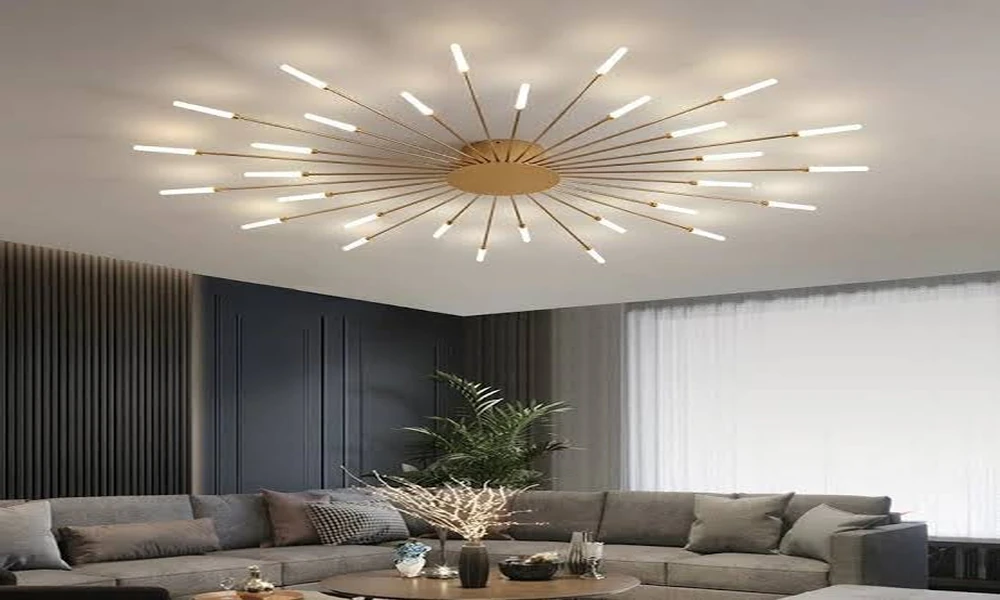
The Functional Baseline Every Ceiling Light Must Meet
Before evaluating the aesthetics of a ceiling light, the functional requirements should be established. How much light does the room need – what lumen output is appropriate for the room size and activities? What color temperature serves the room’s primary uses? Is dimmability required? Does the existing electrical configuration support the fixture type being considered? These questions have specific answers that determine whether a fixture can actually serve the room, regardless of how well it looks.
Ceiling lights that meet the functional baseline can then be evaluated on aesthetic grounds; those that do not are aesthetic choices that will frustrate in daily use regardless of how good they look. The sequence – functional requirements first, aesthetic selection within those parameters – consistently produces better outcomes than selecting on aesthetics and discovering functional inadequacy after installation.
Lumen output requirements vary significantly by room type and size. A 12 x 12-foot bedroom used primarily for sleeping and dressing may be adequately served by a single fixture producing 1,500 to 2,000 lumens. A 12 x 12-foot kitchen used for meal preparation requires substantially more – 4,000 to 6,000 lumens – because the visual tasks are more demanding. Understanding these requirements before evaluating fixtures prevents the common situation of a visually successful fixture that does not light the room adequately.
Aesthetic Considerations That Work Across Room Types
Ceiling light proportionality – the relationship between fixture scale and room dimensions – is the aesthetic variable with the most consistent impact on whether a fixture works visually. Fixtures that are too small for the room look tentative and out of scale; those that are too large overwhelm the room and compete with other design elements for visual attention. The size guidelines established for specific fixture types provide a starting point, but visual evaluation in the actual space – or in a space with similar proportions – is more reliable than formula alone.
Finish consistency with other hardware and fixture finishes in the room creates visual coherence that is not always articulated as a design principle but is consistently experienced as a quality of rooms that feel considered versus those that feel assembled. A brushed nickel ceiling fixture in a room where other hardware is matte black is not categorically wrong, but it requires intentionality to resolve rather than simply coexisting comfortably.
Energy Star certification confirms that a ceiling fixture meets energy efficiency standards, which matters practically for fixtures that operate for extended periods and financially for the lifetime energy cost of the fixture.
Installation and Ongoing Maintenance
Ceiling fixture installation in an existing home typically involves connecting to an existing junction box and is within the skill range of electrically comfortable DIY installers. Heavier fixtures – chandeliers above 35 pounds, fans – require junction boxes rated for the increased weight. Identifying the junction box type before purchasing a heavier fixture prevents the discovery that the box needs to be upgraded before installation can proceed.
LED ceiling fixtures require essentially no maintenance beyond periodic cleaning – the LEDs are rated for 15,000 to 25,000 hours of operation and rarely need replacement. In fixtures with integrated LEDs (where the light source is not separately replaceable), the fixture itself is replaced rather than the bulb when the LEDs eventually fail. For longer-term ownership, fixtures with replaceable LED modules or standard socket configurations provide more practical longevity than fully integrated designs.
Cleaning ceiling fixtures – removing the accumulated dust that affects light output and visual appearance – should happen two to three times per year. The specific cleaning method depends on the fixture materials: glass globes cleaned with glass cleaner, metal finishes wiped with a soft cloth, crystal components cleaned with a specialist cleaner that removes residue without stripping the protective coating.